

The Results Count Finally Got Harder to Find
For years, the estimated number of search results sat near the top of Google’s results page. It was never a perfect metric, but it gave searchers, website owners, and SEO professionals a quick sense of how many results Google claimed to have found for a query.
That changed when Google removed the visible results count from the main Search results page. The change was first noticed during Google’s Search Generative Experience testing in June, and after a period of testing, the removal became more noticeable across standard searches, branded searches, and even site-specific commands.
For everyday users, the missing count may not feel like a major shift. For people who work in search engine optimization, content strategy, website audits, or competitive research, it removes a small but familiar piece of information from the search results page.

Why People Noticed the Missing Results Count
The results count was never something to treat as an exact number. Even so, a lot of people used it as a quick reference point. Search marketers, website owners, bloggers, journalists, and researchers often looked at that number to get a rough impression of how broad a topic was or how many results Google was willing to show for a particular query.
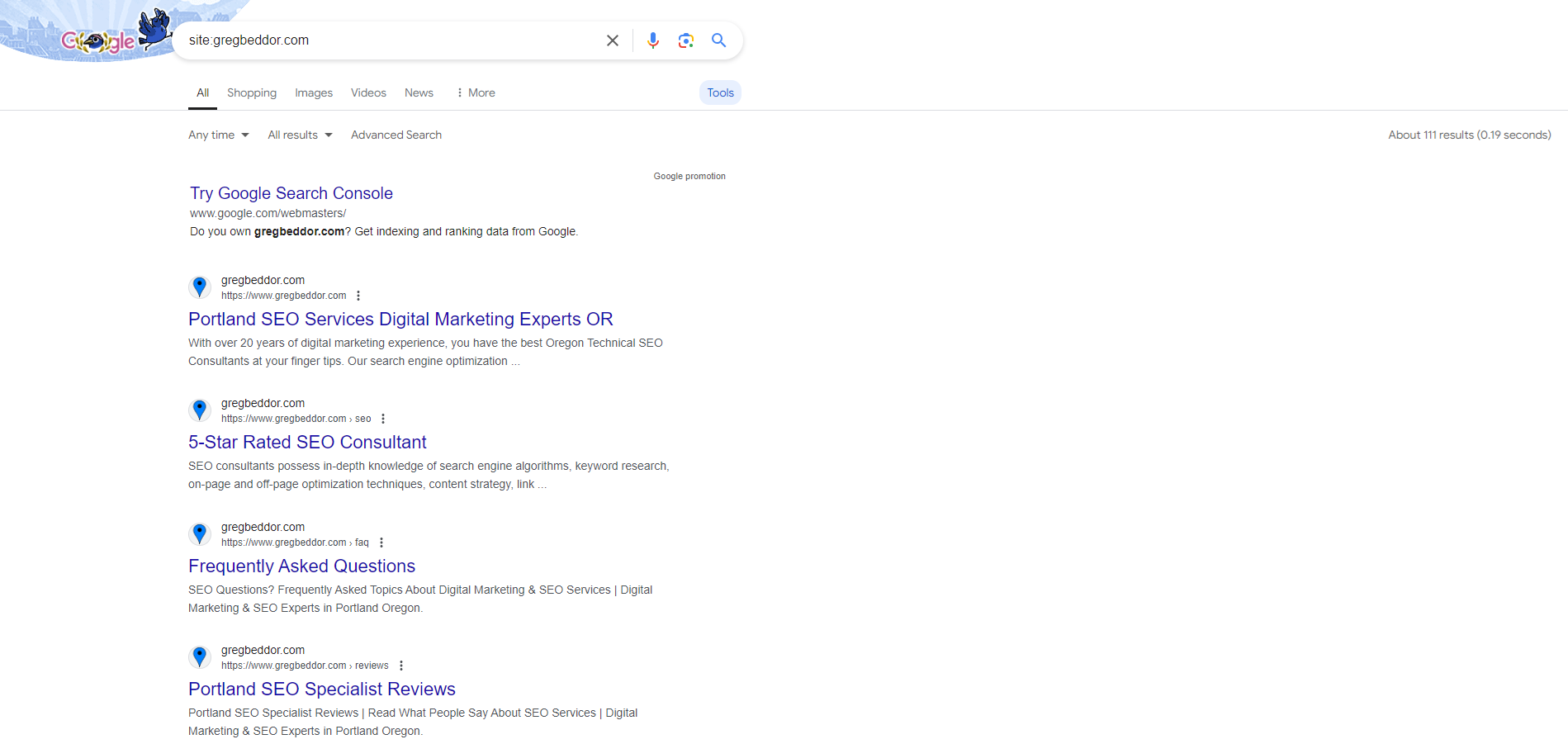
Some users relied on the count when checking site-specific searches. A search such as site:example.com could provide a loose estimate of how many pages from a website Google might be showing in search. That number was always imperfect, but it still gave people a familiar starting point.
Others used the count when evaluating topics, testing headlines, researching content ideas, or comparing how competitive different phrases might look in Google Search. The number was not definitive, but it was part of the search experience for a long time.
Why the Results Count Was Never Completely Reliable
The most important thing to understand is that the results count was always an estimate. It did not provide a clean, final, or fully reliable measurement of the number of pages indexed by Google. This was especially true for site commands.
A site search could show one number at the top of the results page, but that number did not necessarily match the number of pages actually indexed, eligible to rank, or visible through deeper search result pages. For website owners, that created confusion because the count could look precise while still being misleading.
Several factors can affect what shows up in the estimated results count.
- Duplicate Content Pages with substantially similar content may be filtered, grouped, or omitted from visible search results.
- Omitted Results Google often reduces repetitive or low-value results to show what it considers the most relevant pages first.
- Indexing Changes Search indexes change constantly as pages are crawled, refreshed, removed, canonicalized, or reprioritized.
- Query Interpretation Google may interpret the same search differently depending on wording, personalization, location, device, and other factors.
- Canonicalization Multiple URLs can point to similar content, but Google may select one canonical version instead of showing every variation.
For a more accurate understanding of how Google sees a website, the better path is usually a combination of Google Search Console, crawl data, index coverage information, and a proper technical SEO review.
How to Still See the Results Count
Although the results count disappeared from the main search results view, it did not completely vanish. At the time this change appeared, users could still reveal the count by clicking the Tools option on the results page.
That extra step made the number less visible, but it still allowed users to access the estimate when they needed it. Instead of appearing automatically near the top of the page, the count moved behind a menu that many casual searchers may never open.
Why This Matters for SEO Research
Small changes to the search results page can have a bigger impact than they first appear to have. Search professionals get used to certain signals, even when those signals are imperfect. When one of those signals moves or disappears, it changes the way people review search results.
The results count was never a replacement for real keyword research, ranking data, Search Console information, or crawl analysis. Still, it helped people make quick observations. A content strategist might compare result counts across related topics. A website owner might run a site command to see whether Google was showing pages from their site. An SEO specialist might use it as a fast diagnostic clue before moving into deeper analysis.
Now, those checks either require an extra click or a better tool. That is not necessarily a bad thing. In many cases, relying too heavily on the results count could lead to the wrong conclusion.
Better Ways to Check What Google Has Indexed
A site command can still be useful for quick spot checks, but it should not be treated as the final answer. If the goal is to understand whether Google has indexed important pages, there are better ways to approach the question.
Google Search Console is usually the best starting point. It can show indexed pages, excluded pages, crawl issues, canonical problems, sitemap status, and search performance. The URL Inspection Tool can also help confirm whether a specific page is indexed and eligible to appear in search.
For larger websites, crawl software can help identify broken links, redirect chains, duplicate title tags, missing meta descriptions, thin pages, canonical conflicts, and other issues that may affect indexing. This is where a stronger custom SEO strategy becomes more useful than relying on a single number from a search results page.
Frequently Asked Questions
What changed on Google’s Search results page?
Google removed the visible results count from the main Search results page. Previously, users could see an estimated number of results near the top of the page after performing a search.
Can users still see the number of results?
At the time this change appeared, users could still access the number by clicking the Tools option on the search results page. This made the count less obvious, but it did not completely remove access to the estimate.
Was the results count accurate?
No, not in a strict sense. The count was always an estimate. It could be especially unreliable when using site-specific commands to estimate how many pages from a website Google had indexed.
Why is the site command not a perfect indexing tool?
A site command can provide a quick look at pages Google may be showing from a domain, but it does not provide a complete or fully accurate index report. Duplicate content, canonicalization, omitted results, crawl changes, and ranking filters can all affect what appears.
What should website owners use instead?
Google Search Console is a better place to review indexing, coverage, performance, and page-specific issues. A technical crawl, sitemap review, and on-page audit can also help website owners understand what is actually happening with their site in search.
Does this change affect rankings?
The removal of the visible results count does not appear to be a ranking change by itself. It is a change to the search interface. The bigger issue is that users now have one less visible clue on the main results page when doing quick research.
What This Change Tells Us About the Direction of Search
This update fits into a larger pattern. Google has been simplifying, rearranging, and rethinking the search results experience for years. As AI results, rich snippets, local packs, shopping results, videos, and other features take up more space, older elements of the search page may become less prominent.
For business owners, the larger takeaway is simple. Search is not static. Rankings, layouts, visibility, click-through behavior, and search features keep changing. A smart SEO strategy needs to account for those changes instead of relying on old habits or surface-level metrics.
If your website depends on Google visibility, it is worth looking beyond result counts and focusing on the signals that actually affect performance. Strong content, clean technical structure, local visibility, quality links, useful pages, and an adaptable AI search visibility strategy matter far more than an estimated number at the top of a search page.


